
Course Search
Innovative STEM, UDL and 3D Learning in Education
This course introduces participants to innovative STEM education approaches that combine inquiry-based learning, design thinking, 3D technologies and Universal Design for Learning (UDL). The training focuses on how to design inclusive STEM projects that engage all learners, including those from disadvantaged and rural backgrounds. Participants experience hands-on STEM challenges, learn the basics of 3D modelling and explore how to adapt activities to different ages and abilities using UDL principles. The course aims to empower educators to create motivating, real-life STEM projects that foster problem-solving, creativity and collaboration, while integrating digital and green perspectives.
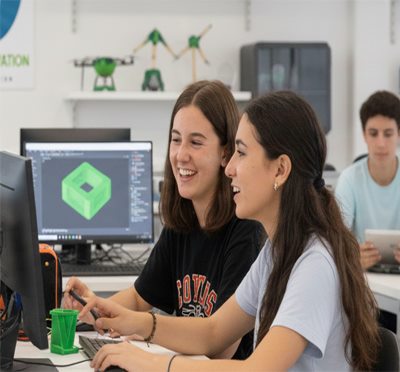
Learning Outcomes
Successful participants will be able to:
-
Explain key principles of STEM education, inquiry-based learning and design thinking.
-
Describe the basics of Universal Design for Learning (UDL) and apply it to lesson design.
-
Use simple 3D design tools to create classroom-ready models.
-
Design inclusive STEM projects that address real-world problems and diverse learner needs.
-
Integrate digital tools and 3D resources into curriculum-linked activities.
-
Develop classroom tasks that promote creativity, collaboration and critical thinking.
-
Plan assessment strategies for STEM projects, including rubrics and student self-assessment.
-
Connect STEM and 3D learning with sustainability and global challenges.
-
Communicate STEM project ideas effectively to colleagues and stakeholders.
-
Prepare an implementation plan for STEM & 3D activities in their own institutions.
Course Details
Target Group
Professionals in the education sector (teachers, school leaders, guidance counselors, vocational trainers) and NGO staff working with children, young people or adults in STEM-related or project-based learning contexts.
Methodology
The course is based on hands-on workshops, design challenges, micro-teaching, peer feedback and reflective practice. Participants experience STEM tasks from the learner’s perspective, then analyse them using UDL and design thinking frameworks. The approach is highly participatory and collaborative, with a strong focus on creating concrete outputs (lesson plans, project ideas, 3D models) that can be implemented after the course.
Course Objectives
-
Develop a solid understanding of innovative STEM and UDL concepts.
-
Learn to design STEM learning experiences based on real-world problems.
-
Explore and practice basic 3D design tools suitable for classroom use.
-
Integrate UDL principles to support diverse learners and inclusive participation.
-
Link STEM activities with digital skills, green skills and key competences.
-
Strengthen participants’ capacity to manage group work and collaborative problem solving.
-
Learn to document and showcase STEM projects using digital tools.
-
Encourage cross-curricular collaboration among teachers and educators.
-
Increase confidence in using technology-rich, hands-on methodologies.
-
Foster long-term planning and partnership building through international cooperation.
Tentative Schedule
Day 1 – Arrival and Introduction
-
Welcome and ice-breaking activities
-
Course overview, expectations and needs analysis
-
Introduction to STEM, inquiry-based learning and design thinking
-
Group discussion: challenges and opportunities for STEM in participants’ contexts
Day 2 – Foundations of STEM & UDL
-
STEM pedagogy and real-world problem-solving
-
Universal Design for Learning: principles and classroom examples
-
Analysing existing lessons through a UDL lens
-
Group work: redesigning a simple lesson as an inclusive STEM activity
Day 3 – Introduction to 3D Design and Maker Education
-
Principles of 3D thinking: from idea to model
-
Hands-on practice with user-friendly 3D design tools
-
Examples of 3D projects for education
-
Group challenge: design a simple 3D object linked to a STEM topic
Day 4 – Designing Inclusive STEM & 3D Projects
-
Project-based learning structure for STEM
-
Integrating 3D, digital tools and UDL strategies into project plans
-
Group work: drafting a STEM/3D project for participants’ own institutions
-
Peer feedback sessions and refinement
Day 5 – Assessment, Documentation and Dissemination
-
Formative and summative assessment in STEM projects
-
Rubrics, self- and peer-assessment tools
-
Using digital platforms to document and share project results
-
Connecting projects to wider school or NGO strategies
Day 6 – Implementation and Action Planning
-
Identifying resources, partners and support structures
-
Developing realistic implementation plans for the next school year
-
Individual and institutional action plans
-
Course reflection, evaluation and certificates
Day 7 – Departure Day
-
Informal networking and follow-up planning
-
Cultural activities and farewell